Ways to see samba in Rio
Rio samba show: how to choose and book
Ginga Tropical, the Sambadrome parade or live samba in Lapa: what each one is, how to book it and who should skip it, checked against official sources.
See Rio Samba Night dates on GetYourGuide ↗Quick answer
If you want one booked evening on any date, Ginga Tropical is the easy choice: a staged show at Centro Cultural Veneza in Botafogo with a short samba lesson, bookable in English. For the Carnival parade, tickets come from LIESA, the league of samba schools, for a few nights just before Lent. For informal live samba, go to Lapa or Pedra do Sal, where there is nothing to book.
Three ways to see samba in Rio
| Ginga Tropical | Sambadrome parade | Lapa and Pedra do Sal | |
|---|---|---|---|
| Format | Staged show | Samba schools compete | Live music, informal |
| When | Three times a week | Just before Lent | Check locally |
| Samba share | One of many rhythms | All of it | All of it |
| Booking | Online, in English | Through LIESA | Usually none |
| Best for | Any trip date | A Carnival trip | A local feel |
Three kinds of samba, three ways in
When people search for a samba show in Rio, they usually mean one of three things. The first is a staged show made for visitors, such as Ginga Tropical, which plays three times a week at a cultural centre in Botafogo. The second is the Carnival parade, where the city's samba schools compete at the Sambadrome for a few nights just before Lent. The third is informal live samba in bars, squares and clubs, where musicians play for whoever turns up. They overlap in sound but not in format, schedule or how you get in. Choose the format first, then the booking.
What Ginga Tropical is, and what it isn't
Ginga Tropical has played since 2013. Its official site describes a tour of Brazil's regional rhythms, not samba alone: it names forró, axé, funk, country and Carnival alongside samba, and its about page adds capoeira, frevo, maculelê and bossa nova. Dancers and live musicians share the stage, and the show is interactive. That makes it a broad introduction to Brazilian music and dance, with samba as the best-known part. If you want nothing but samba, the next sections cover better fits.
What the booking covers
The ticket covers the show, a short samba lesson before it, and a photo opportunity with the dancers. Drinks are sold at the venue and paid for separately, and transport is not included. The show runs about an hour and a half, the hosts speak Portuguese and English, and the venue is accessible for wheelchairs and pushchairs. Bring a passport or ID card. The booking calendar and your confirmation show the date and start time. Go by those, because the show's own pages and booking sites have not always agreed on the schedule.
- Included: the show, the samba lesson, a photo with the dancers
- Not included: drinks and transport
- Bring: a passport or an ID card
Book through GetYourGuide or direct
The show also sells through its own site, which has a booking calendar. Booking through GetYourGuide gives you an English checkout, your own currency, the option to reserve now and pay later, and free cancellation up to 24 hours before the show for a full refund. Booking direct means dealing with the organiser in its own terms, and its FAQ describes its own change and cancellation rules, so read them first. If you speak Portuguese or want to arrange a date change by email with the organiser, direct may suit you better. Otherwise the choice mostly comes down to convenience.
The Carnival parade at the Sambadrome
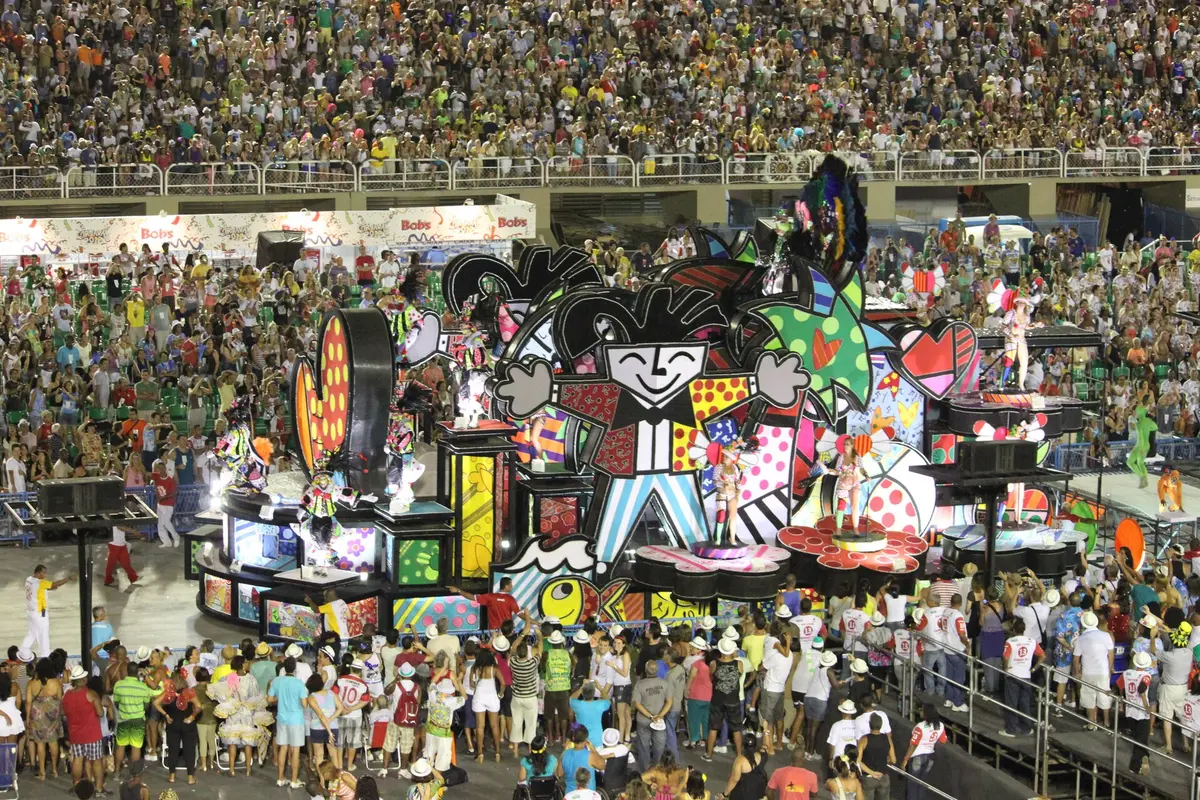
The Sambadrome is a purpose-built parade avenue designed by Oscar Niemeyer, where the samba schools parade and compete each year before Lent. Official tickets are sold by LIESA, the league that organises the top-division parades, through its website and its sales office. Seating ranges from open grandstands and individual chairs to boxes and private suites, and a block of numbered stands is handled through travel agencies for visitors. LIESA's rules set a minimum age of five. Because the parades happen only around Carnival, and the schools parade one after another over several nights, this option only works if your trip dates line up. If they do, it is the biggest samba event in the city.
Rehearsals in the run-up to Carnival
If you are in Rio in the months before Carnival, the samba schools hold technical rehearsals at the Sambadrome. These start in December, and LIESA has published a rehearsal calendar on its site before each Carnival. A rehearsal is not the parade itself, so expect a different kind of evening, and one that depends on which schools are scheduled. Check LIESA's site for the current dates and entry rules, because they change every year. Outside that season, a staged show like Ginga Tropical is the realistic way to see an organised samba performance, since the official parade only happens once a year.
Live samba in Lapa and Pedra do Sal
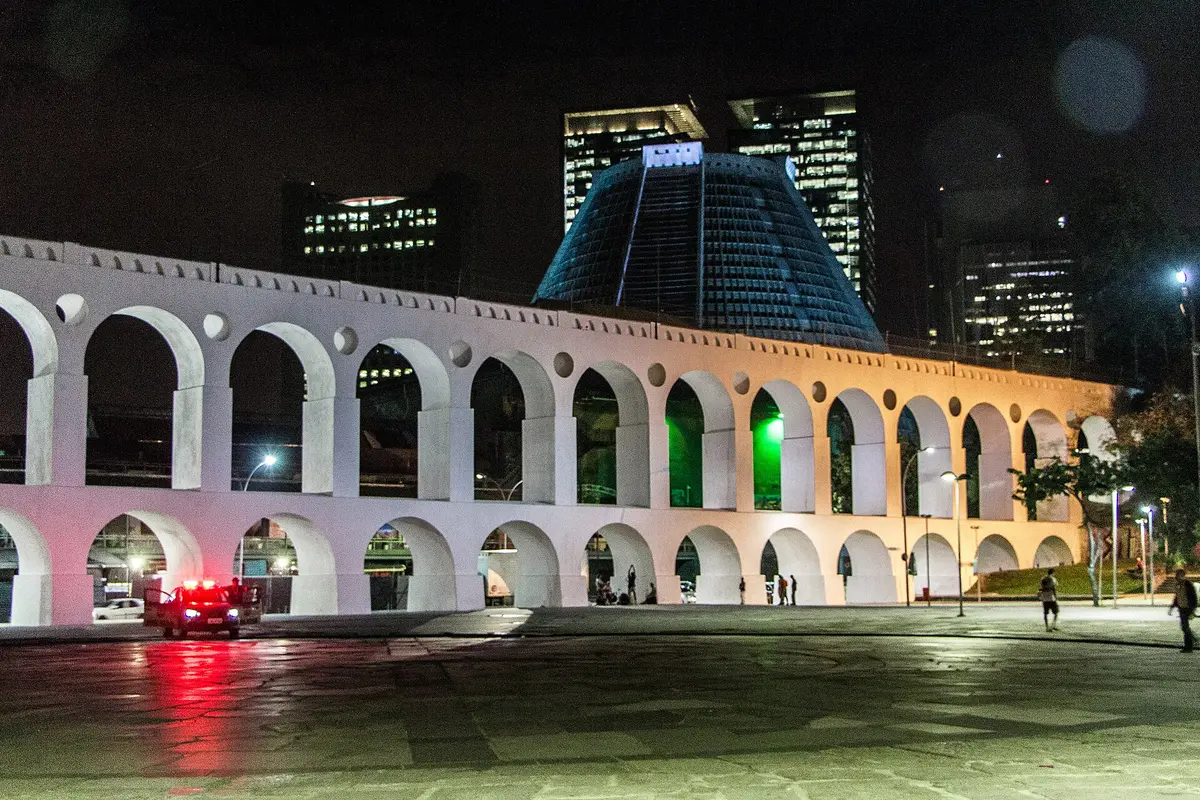
Lapa, in central Rio, has been known for its music venues since the 1950s, and people gather there to hear samba, forró, choro and more. The Arcos da Lapa aqueduct, inaugurated in 1750, is the landmark. Pedra do Sal, in the Saúde neighbourhood, is described as a centre of samba and choro and sits in the area known as Little Africa. Both are informal: no seat to reserve, no lesson, no fixed running order. The music is looser and the crowd is local. Ask your accommodation which nights are running, and plan how you will get home.
Where samba comes from
Samba, as Wikipedia puts it, is a broad term for rhythms that originated in the Afro-Brazilian communities of Bahia in the late 19th and early 20th centuries. The modern urban style that the samba schools use took shape in Rio's Estácio neighbourhood in the late 1920s, with more drums and a more syncopated feel. UNESCO declared samba de roda, the circle form from Bahia, part of the Intangible Cultural Heritage of Humanity in 2005. That history is why a roda in Pedra do Sal, a parade at the Sambadrome and a theatre show can all be called samba, and why they sound different.
Read next: Samba, Explained: From Bahia's Roots to Rio's Sambadrome
Which one should you pick?
Match the format to your trip, not to the word samba. Each option does one job well, and none of them replaces the others. Many visitors will only have time for one, so the question is what you want that evening to be: a polished introduction, the biggest event in the city, or a night among locals. Use the list below as a quick filter, then read the matching section above for the details.
- Travelling around Carnival and want the parade: LIESA tickets for the Sambadrome
- Any other date, first visit, want one booked evening: Ginga Tropical
- Want to hear how samba sounds in a neighbourhood: Lapa or Pedra do Sal
- Want to understand the instruments first: read our guide to the bateria
Read next: Bateria instruments: what each one does
Getting to the show and what to bring
Ginga Tropical plays at Centro Cultural Veneza, Avenida Pasteur 184, in Botafogo. The booking shows the venue as close to public transport, and Botafogo has its own metro station; a taxi or rideshare from Copacabana, Ipanema or the centre also works. The show's access rules do not allow shirtless, swimwear or bare feet, and they bar drones and large items such as tripods, umbrellas, beach chairs, coolers and suitcases. The booking also lists flash photography, selfie sticks and professional cameras as not allowed. A phone for photos with the dancers is the safe choice.
Who this isn't for
Skip Ginga Tropical if you want only samba, a real samba-school rehearsal, or a late party. It is a produced evening with an audience, and the organiser calls interactivity one of its trademarks, so anyone who dislikes being drawn in should know that before booking. It also isn't the Carnival parade. If you are travelling at Carnival time and the parade is the goal, buy from LIESA instead. And if you want a cheap, spontaneous night out, Lapa fits better.
Frequently asked questions
Is Ginga Tropical a real samba show?
It is a staged show for visitors, not a samba school or an informal roda. Dancers and live musicians perform a tour of Brazilian rhythms, with samba as one part. For informal samba, try Lapa or Pedra do Sal.
How long is the show?
About an hour and a half, with a short samba lesson before it. The booking calendar and your confirmation show the date and start time, so go by those.
Can I see the Carnival parade at other times of year?
Not the official parade, which takes place just before Lent. Samba schools hold technical rehearsals at the Sambadrome in the months before it, and LIESA's site has carried the calendar. Outside that season, a staged show is the usual option.
Can children go to the Sambadrome?
LIESA's rules set a minimum age of five, and the authorities may ask for a birth certificate. Check the age policy for any other show with the organiser before you book.
Is there a dress code?
A basic one. Ginga Tropical's access rules do not allow shirtless, swimwear or bare feet. Otherwise dress as you would for an evening out.
Can I cancel the booking?
Booked through GetYourGuide, you can cancel up to 24 hours before for a full refund. A booking made directly follows the organiser's own terms, so read them first.
Sources